
Functional Art Is Reshaping Who Art Is For
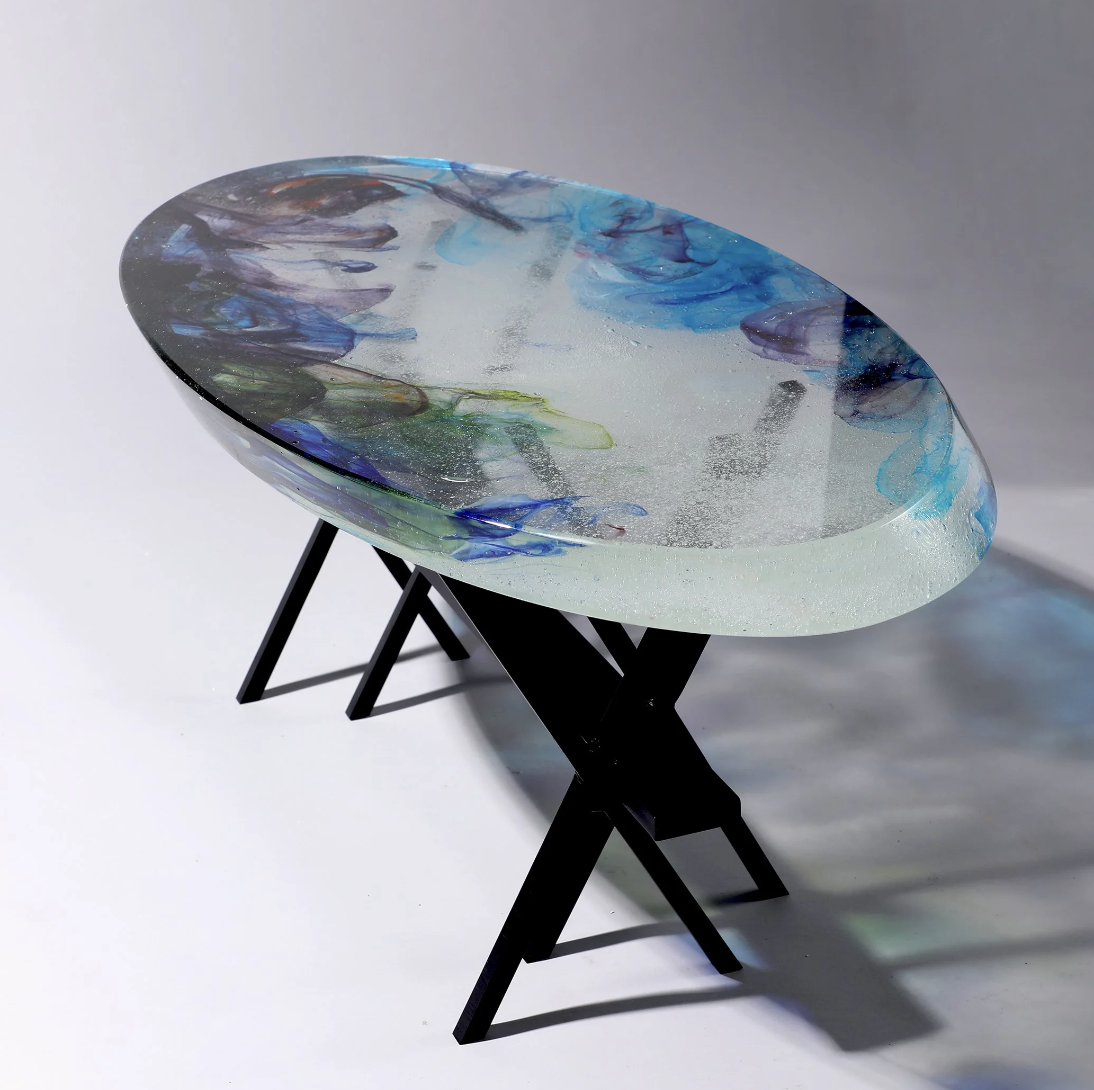
C-lective Artist David Ruth’s Cast Glass Table
Jamie Randel | Marketing Analyst, San Francisco, CA
Not all art hangs on walls. Functional art pieces blur the line between art and utility. It’s the intersection of aesthetics and functionality, merging artistic expression with practical everyday use. Functional art comes in all shapes and sizes from bowls and lamps to living room murals and park benches. A few C-lective artists that have examples of functional art are Evan Hobart and his ceramic works, Dominique Birdsong’s mirrored sculptures, and David Ruth’s cast glass tables and doors. These types of artworks transform your living space, adding value and purpose to the objects you use on a daily basis. Interacting with art in otherwise mundane settings or tasks is a quiet way to improve your state of wellbeing. Research has even proven that being around and interacting with art everyday is linked to psychological health benefits through slowness, stress reduction, and fascination with beauty. Functional art expands how we define artistic value and plays a key role in democratizing art, shifting from an exclusive experience to something anyone can live with and use.
Functional art has long been part of humanity, from traditional craft cultures such as textiles and ceramics to woodworking. However, there’s a longstanding debate over what qualifies as art; and the boundaries begin to blur for some when discussing the matter of functional art. For instance, functional ceramics such as mugs and vases are frequently dismissed as more basic craft and design rather than definitively art due to their simple and practical purpose. However, this stance tends to stem more from institutional definitions. So where does the line exist between an object being art rather than design? Several factors could be argued as the difference: intention, handcrafted vs. mass produced, uniqueness, emotional impact and more. Beyond just a debate, the exclusion of artistic and functional objects from the “art” category definition can be harmful. Artists who create functional art pieces—that are very much artwork to them—can then have their livelihoods be classified as businesses, effectively disqualifying them from support or grants reserved for artists and more traditional art forms. Functionality and artistic value can and should coexist.
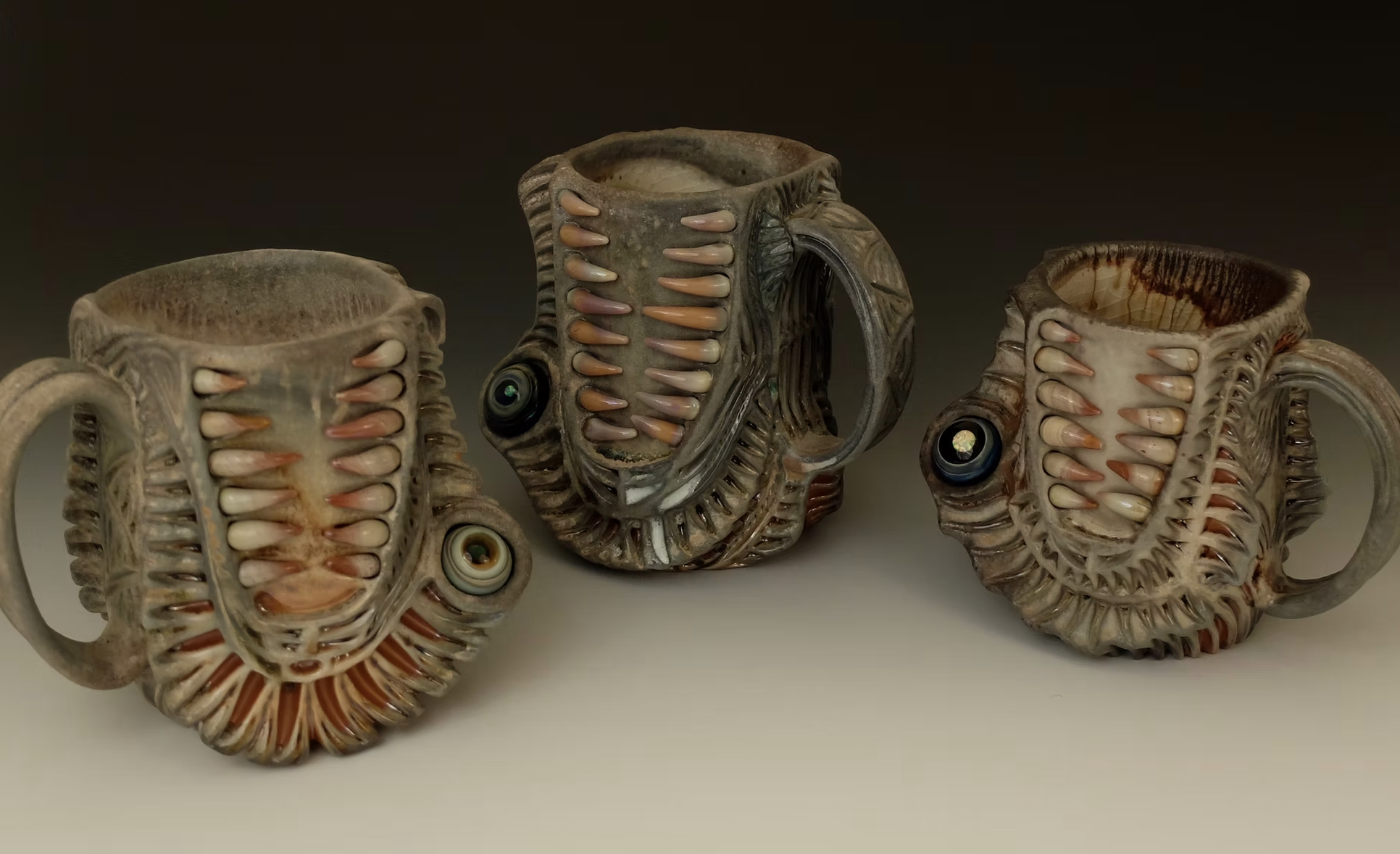
C-lective Artist Evan Hobart’s Monster Mugs
Regardless of the discourse surrounding the definition of functional art, there is no disagreement that functional art makes art accessible and practical for the average person. Art has a reputation for being expensive, untouchable and reserved for the elite, but some of the most meaningful pieces are the ones you use every day. This democratization of art is a process that C-lective supports: Making art creation, consumption, and appreciation accessible to all is a value we hold close. More broadly, democratization refers to expanding access beyond a limited group, an idea often used in discussions of technology and access to knowledge, and functional art applies that same principle to how we experience art in daily life. Key definers include increased cost accessibility to materials and media, and internet access to training and recognition. It makes art accessible not just to view, but to use, interact with, and live alongside. Art shouldn’t only be in galleries and museums but rather should fill homes and workplaces. High and fine art have often been made to be exclusive through high costs, specialized knowledge, and elitism. Artistic democratization shifts art into the general public’s hands as diversity in art creation and viewing is broadened.
C-lective has a parallel mission: bringing/delivering fine art into everyday homes—not just those of art collectors and experts. From art novices to seasoned fine art historians, everyone should garner the benefits that come from coexisting with art. Whether that’s a traditional painting or perhaps the more accessible medium of functional art items, no one should be excluded from fine art. Curators introduce members to contemporary artist’s work and their backstories to illuminate artworks that may be suited to you and your home. Additionally, in the spirit of democratization, there’s no pressure to commit to a purchase with a C-lective membership, you get to live with as many fine art pieces as you’d like since they’re rotated in and out of your house throughout the year. Artistic democratization isn’t just about cost, it’s about who gets to participate. Besides, democratizing art through function isn’t new—it’s a recurring response to elitism in art.
Functional art doesn’t just make art accessible, but rather it is a part of redefining where art lives: not in institutions, but in the rhythms of everyday life.
