What I Missed The First 200 Times
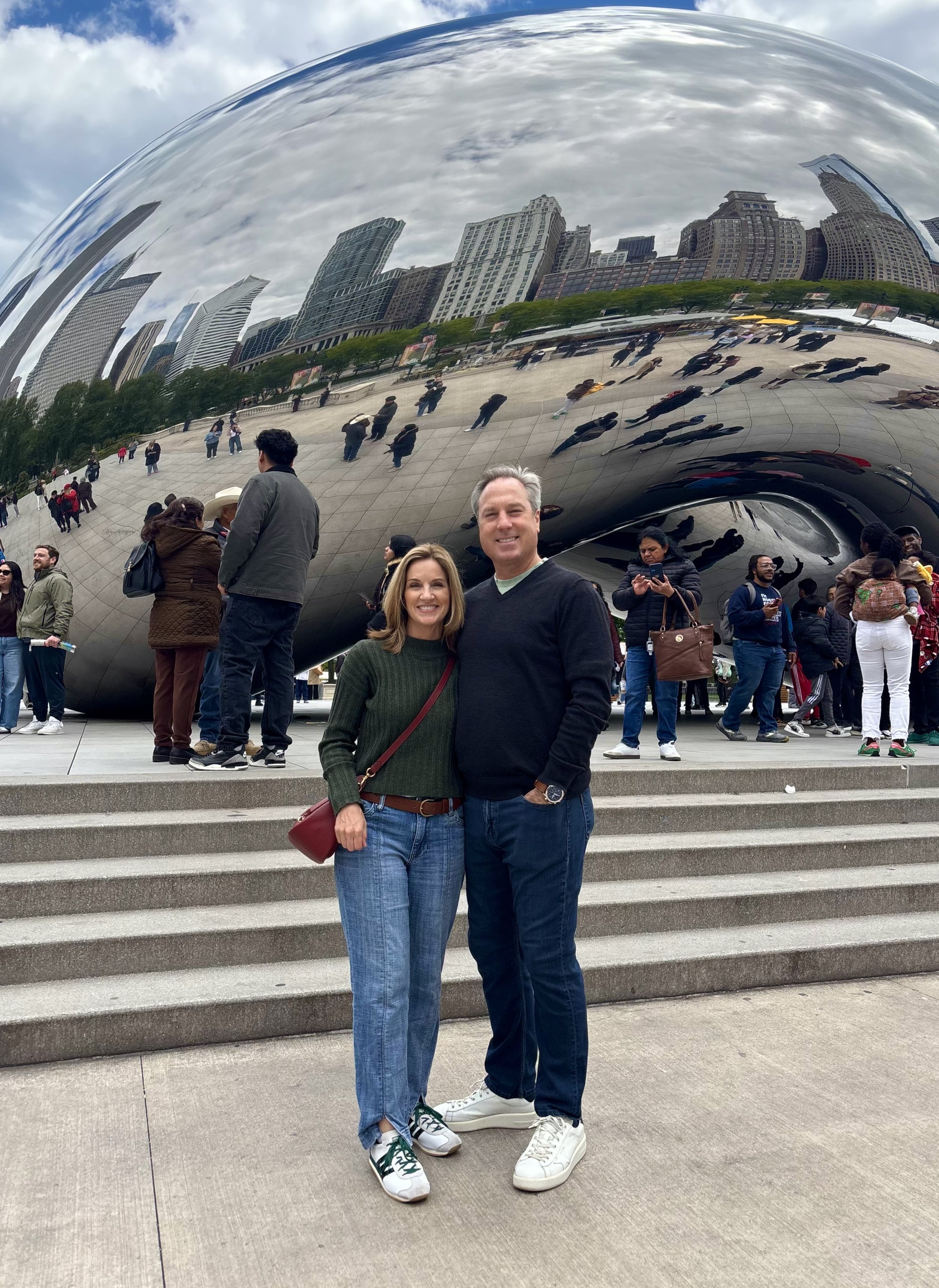
C-lective Founders Kevin & Christine Sharps at Cloud Gate.
Kevin Sharps | Co-Founder & CEO, San Francisco, CA
I was lucky to spend an active weekend in Chicago taking in the city sights and food scene with my wife’s cousin and her husband. It was their first trip to Chicago, and after more than 200 trips there myself, I got the opportunity to see it through new eyes. It’s not often that we’re given a gift like that, the chance to see something familiar in an entirely different way. It was a wonderful opportunity to pause and really look at the city, appreciating the thought, intent, and beautiful execution behind its remarkable skyline, world-famous art museum, and renewed commitment to community spaces.
The Art Institute is perched on the edge of Millennium Park. The park is home to public art (Cloud Gate, or the iconic "Bean"), manicured lawns, and entertainment areas. I am always appreciative of how Chicagoans embrace their parks and public spaces. They are clean, highly functional, beautiful, and well attended. You get a real sense that the people of Chicago not only drive the commerce that anchors the Midwest, but are equally committed to enjoying time with friends and family in these delightful public spaces. The parks are not simply well designed, they are well loved.
We experienced the Art Institute after enjoying the architectural tour that carries you up and down the river through the center of the city. The docents are skilled at helping you see architecture through a design lens, as an expression of civic aspiration and a reflection of intended use. One can’t help but think in longitudinal terms about how cities are formed, how ambition and a sense of pride can shape the landscape over generations. It creates a feeling of connection, a reminder that we are all beneficiaries of people who cared enough about community and beauty to make life better for those around them.
That same feeling carried over to the Art Institute. The building is ideally located, and its façade on Michigan Avenue is worthy of the great architecture that populates the skyline. One only has to pause for a moment to think about all the patrons, philanthropists, and civic leaders who have come together to create something that has so ably placed Chicago on the world art stage.
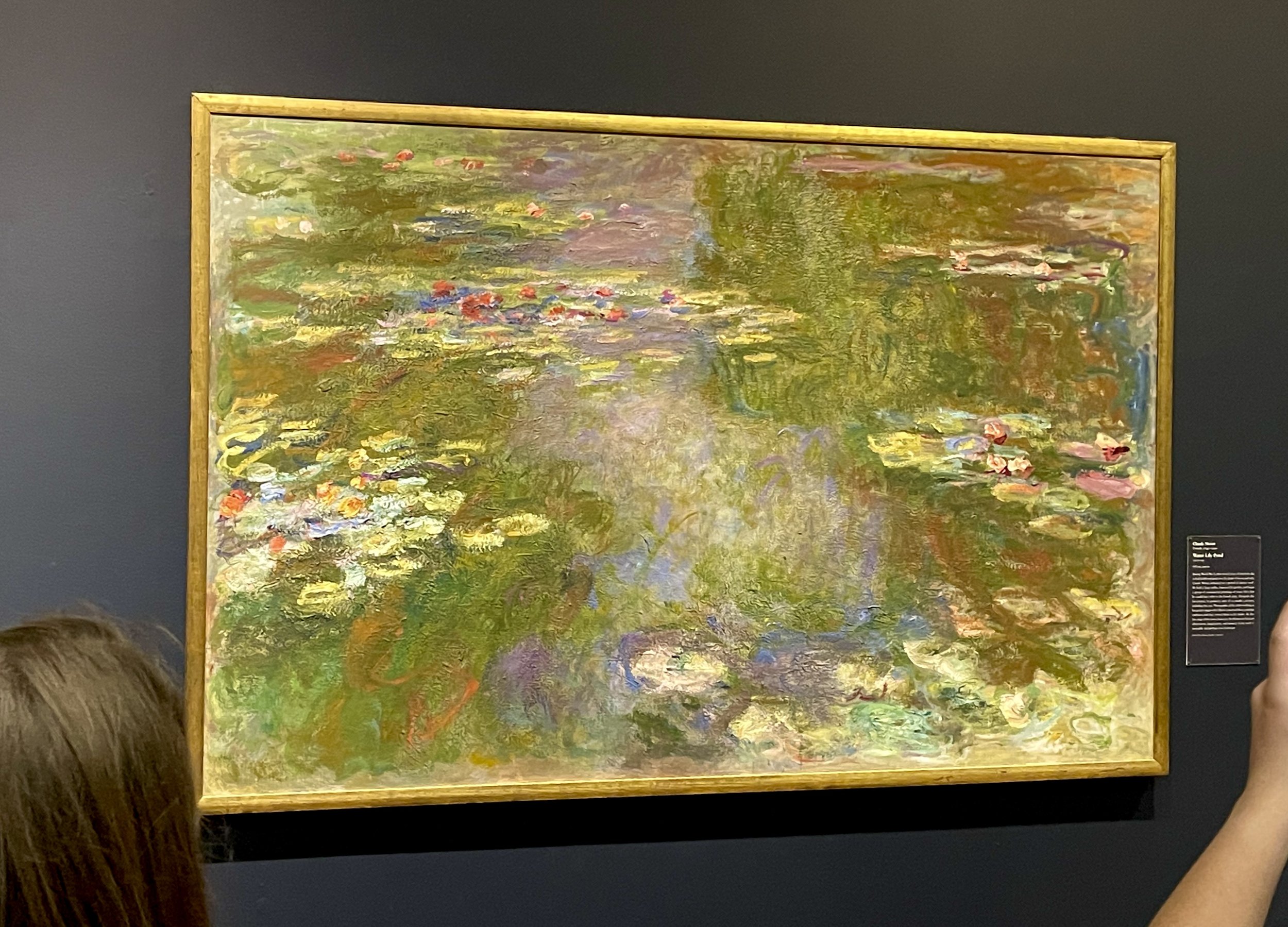
Water Lily Pond, 1900 by Claude Monet
During our visit, our group focused on the Impressionists. The curation of Monet and Van Gogh in proximity to one another added depth to my appreciation of how they captured light and chose to convey a vantage point. The Seurat and Van Gogh masterpieces were almost lost in a sea of people, but I found myself more delighted by the crowds than frustrated by them. It felt like we were all moving toward the front row at a concert we were genuinely happy to be attending. There was a familiar, unifying buzz in the room. Much like concerts today, a sea of smartphones rose above the crowd as people tried to capture these masterpieces for themselves. While many of those photos may never be looked at again, the impulse felt deeply human. We all knew we were witnessing something extraordinary, and for a brief moment wanted to preserve a piece of that experience. That shared sense of wonder swept me into the crowd, and I didn't mind floating along with it for a while.
The twenty-one-panel epic by Raqib Shaw had everyone stopping repeatedly, moving close to the canvas and then stepping back again to take in the vast amount of emotion, technique, and imagery contained within. The crowd danced and crisscrossed around one another like a busy intersection or a dance hall. The ambition and emotion that permeate the piece are impossible to ignore. It hangs in what is essentially a wide hallway, yet it stops traffic with remarkable gravity.
We also all enjoyed the oversized Georgia O’Keeffe that occupies the stairwell between floors. The space allows multiple vantage points from which to take in its scale, but I felt most rewarded by the curator’s commentary, which helped provide context about the artist, her relationship with the museum, and the piece itself. It was another example of the thought and care that go into so many Chicago institutions and the experiences they create. Without that commentary, I may have given the work a thoughtful yet passing glance before continuing up the stairs. Because I was encouraged to pause and engage with the work on both emotional and physical levels, the piece became one of the highlights of the visit.
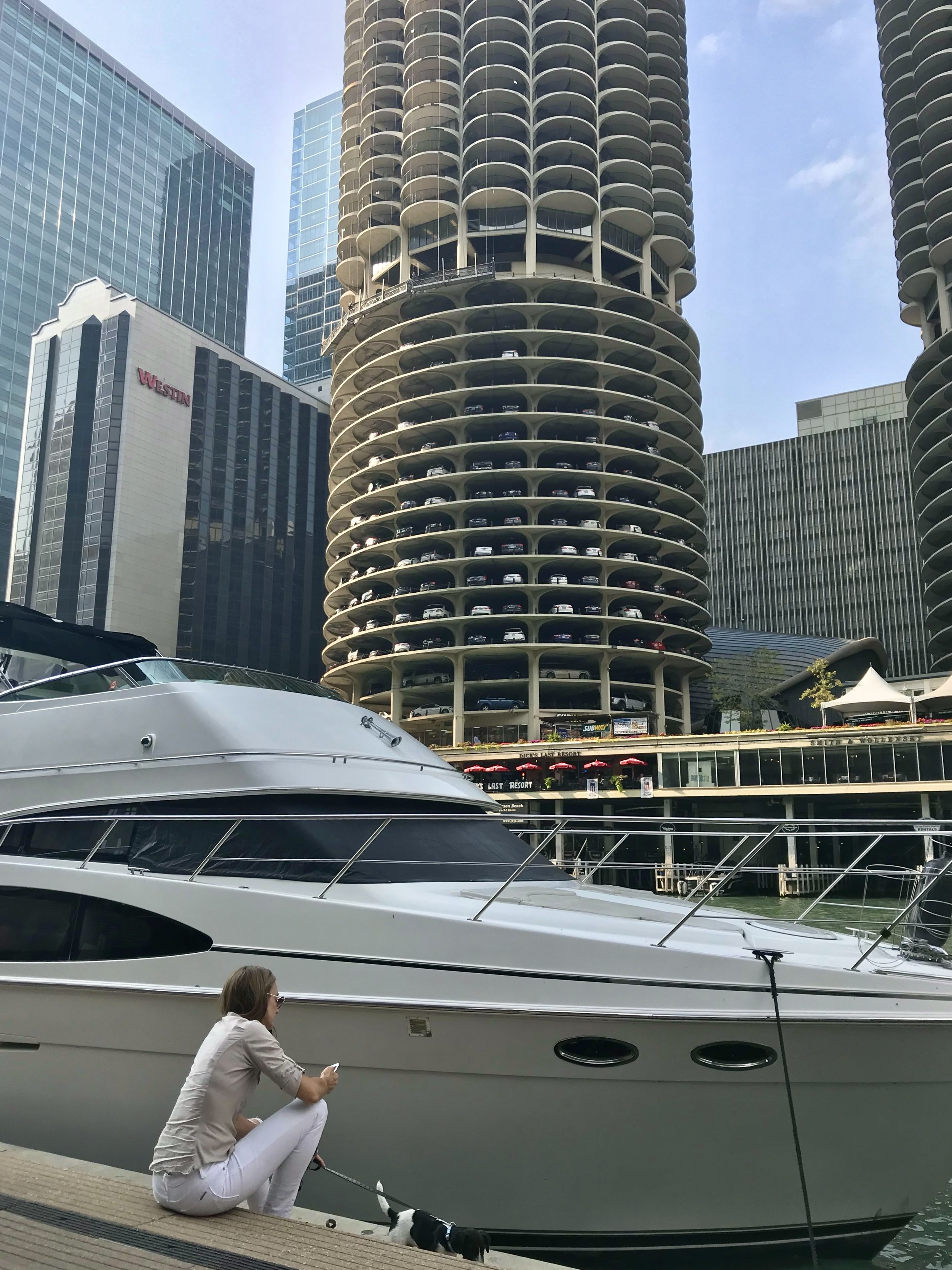
Chicago Waterfront
It was a special weekend, seeing a place so familiar reveal a new side of itself through fresh eyes, and with the help of docent and curator insights. The Art Institute was a wonderful capstone to our Saturday, and the trip as a whole left me energized by the idea that familiar places can still surprise us. In many ways, it reminded me of what we strive to do when we bring new fine art into your home. A new work can renew a blank wall, transform a room you've seen every day for years, and invite you to experience a familiar space with fresh perspective. Wherever I go, I am reminded of the profound impact of art, connection, and community, and I remain grateful for the ways they continue to enrich our lives.