The Plight of Public Art — And Why We Need It

Cupid’s Span in Rincon Park
Courtney Sharps | Curator, New York, NY
The Plight of Public Art — And Why We Need It
If you have ever walked along the Embarcadero in San Francisco, you have likely stopped at the sight of the monumental bow and arrow planted in the grass along the waterfront. Titled Cupid’s Span and created by Claes Oldenburg and Coosje van Bruggen, the sculpture is playful, striking, and impossible to miss. It nods to San Francisco’s reputation as a “port of love,” both a literal harbor and a cultural epicenter of love, freedom, and creative possibility, shaped by the Summer of Love, the enduring spirit of Haight Ashbury, and the uplifting of the LGBTQ+ community. The city’s loving feeling is reinforced by a landscape that feels inherently romantic, where mountains meet the ocean and fog wraps the city in a familiar embrace.
The sculpture does more than just decorate a lawn. It anchors memory. It signals identity. It gives shape to a feeling. It creates a distinct link from the past to the present. That is why public art matters.
When we remove public art, we do not simply clear space. We erase symbols, stories, and shared reference points. When we fail to place art, we fail to connect people with space and ideas. Still, in cities across the country, public art is treated as expendable.
Municipalities country-wide are facing budget shortfalls and are turning to cultural funding as an easy target for cuts. In Ann Arbor, the city council voted to reduce funding for its public art program as part of broader budget deliberations, a move that sparked debate about whether art is essential civic infrastructure or discretionary spending.
Closer to home, reporting in the San Francisco Chronicle detailed how Oakland slashed nearly all of its cultural grants, roughly 1 percent of the city’s total budget, and eliminated its Cultural Affairs Manager position. This role was responsible for overseeing public arts programs. The cuts were cited as necessary steps to close a significant deficit.
When cities are grappling with housing shortages, infrastructure needs, and public safety concerns, funding for art can appear like a luxury. Coverage in SFGate of the sea serpent sculpture Naga in Golden Gate Park highlighted the hundreds of thousands of dollars required to fabricate and maintain a large-scale public artwork. Numbers like that are easy to isolate. Unfortunately, the returns are harder to quantify.
These decisions are difficult and elected officials are keen to be seen as responsive to a city’s immediate challenges. But like any leadership challenge, it focuses on the immediate over the long-term. By treating public art as a cost, it misses what public art actually accomplishes for communities.
Public art does three important things to enrich communities: It removes barriers to access, it improves quality of life, and it adds economic value to the community it shares space with.
By placing art directly into daily life, outside the walls of museums, galleries, and private collections, community leaders eliminate barriers to access. A child walking to school, a commuter on their way to work, and a visitor seeing a city for the first time all encounter it equally. There is no ticket price, no dress code, no prerequisite knowledge required.
I spoke with Mauro Schenone Ugueto, formerly with the Public Art Fund and now at Artsy, about what public art means to him:
“Public art serves as a gateway into the world of art, removing barriers and placing artworks directly into daily life. Encountering art on a commute or in an unexpected public space invites curiosity, sparks conversation among strangers, and creates moments of shared experience and common ground. In that sense, public art not only enriches cities visually, but also socially and culturally.”
His point is crucial. Public art does not simply beautify. It socializes. It creates shared reference points. It becomes part of the collective language of a place.
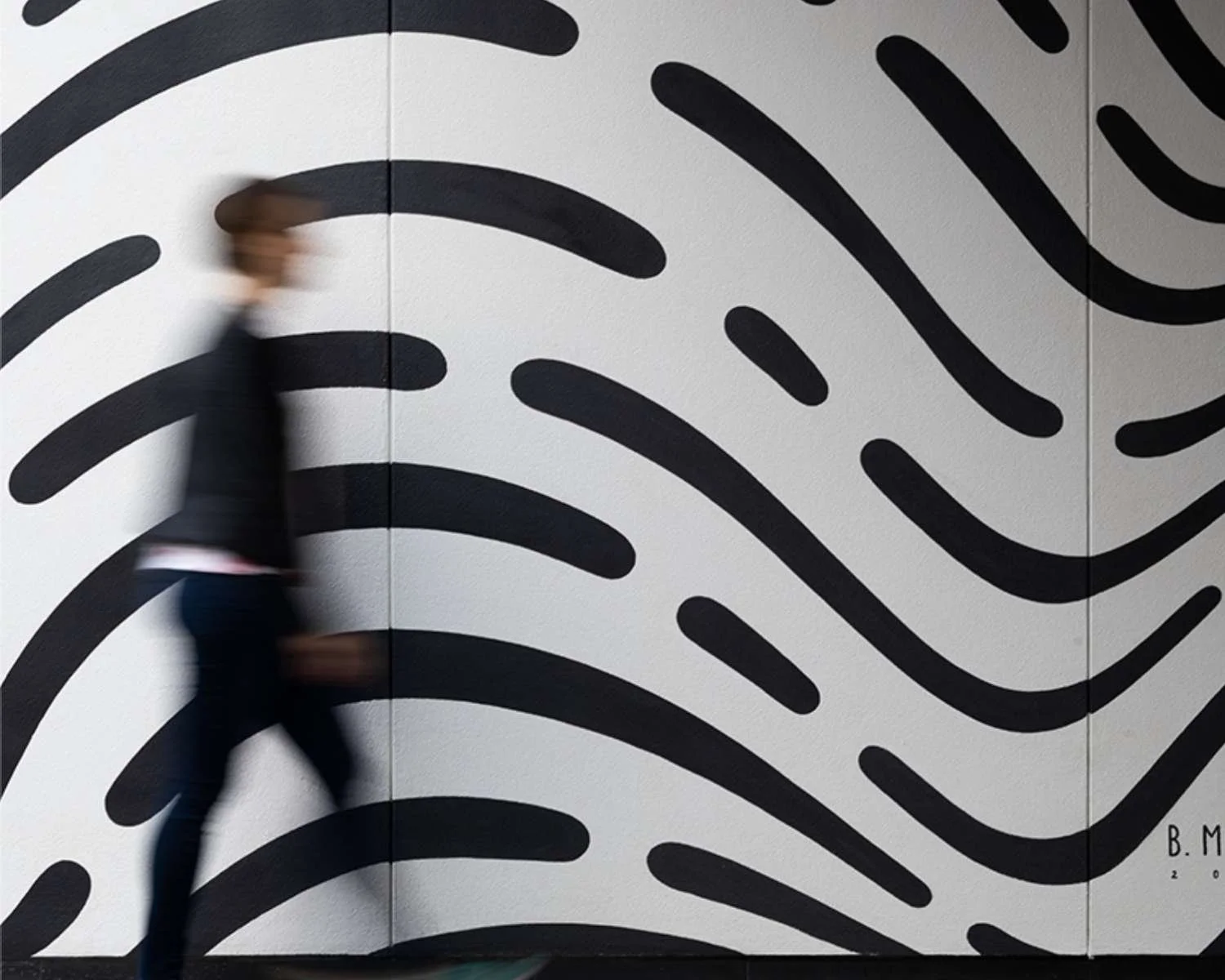
Brendan Monroe’s Roll at the Moscone Center
Returning to Cupid’s Span, the sculpture does not just occupy space. It helps define it. It tells visitors something about San Francisco before a single word is spoken. It reminds residents of the city’s layered identity: romantic, rebellious, hopeful, creative.
There is also growing research supporting the connection between arts engagement and wellbeing. Studies from the World Health Organization and the National Endowment for the Arts link exposure to the arts with improved mental health, reduced stress, increased social cohesion, and greater civic participation. My colleague Jamie’s recent article, The Influence of Art on Wellbeing, further explores how sustained engagement with art can positively affect both psychological and physiological health.
Public art amplifies those benefits because the audience is unlimited. A single sculpture can impact thousands of people every week, often in subtle but cumulative ways.
Public art also supports local creative economies. It provides commissions for artists, fabricators, engineers, installers, and conservators. Research from Americans for the Arts demonstrates how arts funding circulates through local labor and business networks, strengthening economic as well as cultural resilience.
At C-lective, we care about public art because we care about the entire art ecosystem. Art in the home and art in the hometown are not separate conversations. They reinforce each other. When artists receive public commissions, their practices grow. This is how we came to meet several of our now rostered artists like David Ruth and Jennifer Lugris. When communities encounter art in their daily environment, curiosity deepens. That curiosity often leads people into the arts and new creative avenues.
Public art is not a distraction from civic priorities. It is part of what makes cities worth investing in. It shapes identity, fosters connection, supports creative labor, and enhances wellbeing.
The more art we encounter, inside our homes and out in our streets, the more expansive our sense of possibility becomes. Public art is not an indulgence. It is an invitation to better communities and better living. It is one we cannot afford to lose.