
The Dalmatian Coast: Art, History & Inspiration
Jamie Randel | Lead Researcher & Marketing Analyst, San Francisco, CA
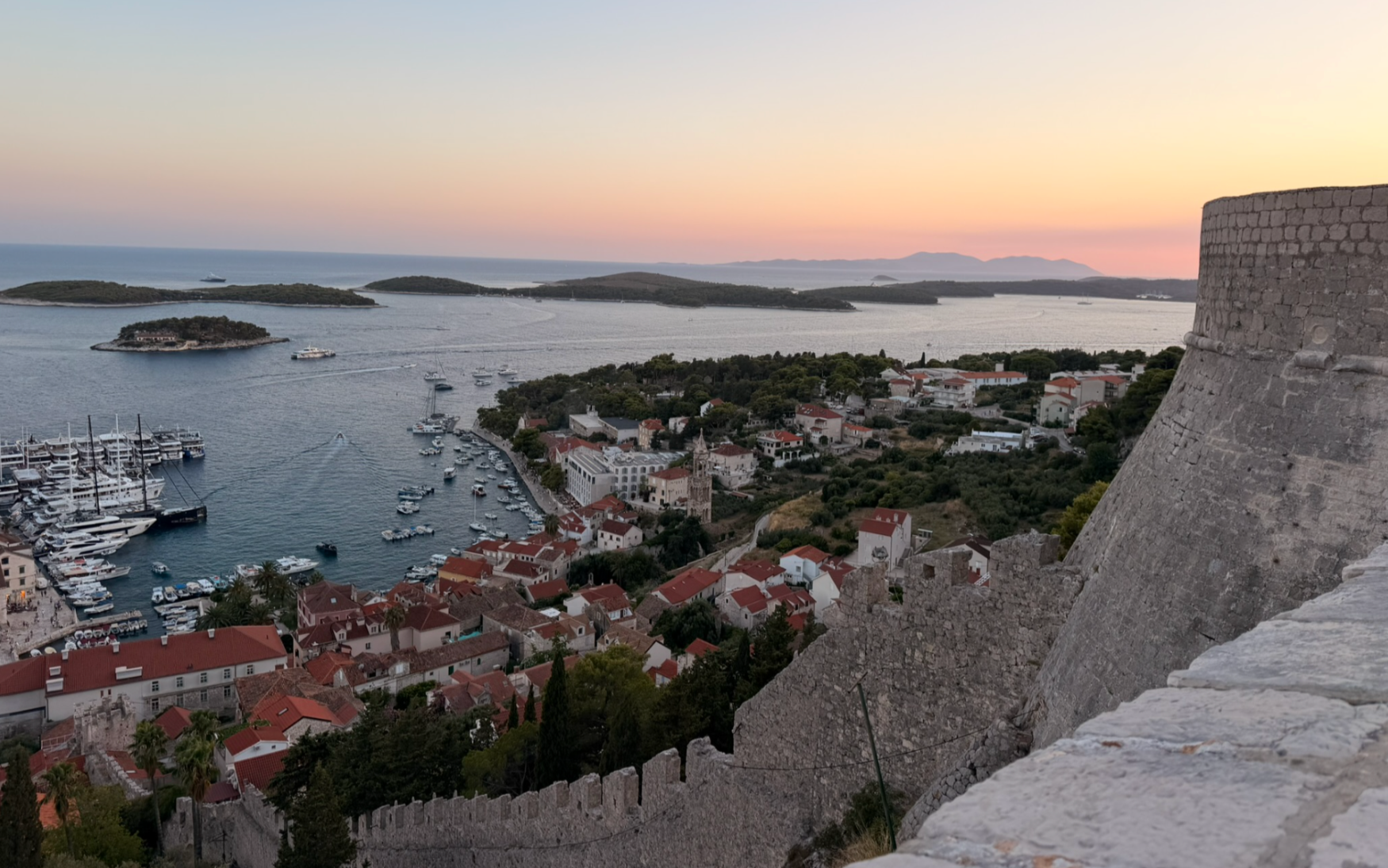
This August, I was lucky enough to take a trip to the Dalmatian coast with two close friends that live in England. We traveled to three Croatian cities and, in between beach trips, encountered many historical, architectural and cultural wonders. The summer festivals were taking place during our visit that featured a variety of arts throughout the cities including visual art, theatre, music, dance, opera, and folklore in the squares. We passed through museums displaying contemporary art as well as historical sites like the Hvar Theatre–the oldest working civic theatre in Europe.
On the island of Hvar, we hiked up to the Tvrđava Španjola, or Spanish Fortress, which displayed a breathtaking panoramic sunset view. Besides the sprawling vista of the town, port, mountains, and adjacent Paklinski islands, the fortress itself contains an impressive history. The Fortica was built in the 16th century (completed in 1551) during Venetian rule to protect the island from potential attacks, particularly due to its central location in main nautical pathways and defensive position. Built directly on top of an existing medieval fortress, it took several hundred years to be satisfactorily fortified and has been restored and maintained throughout recent centuries. The fortica has four circular bastions, a tower, crenellated walls, an armory, gunpowder store, water cisterns, garrison quarters, a prison, and a chapel dedicated to St John the Baptist. While clearly built for function in the past, today the architecture gives art a physical structure to transform the functional space into a meaningful cultural experience. Walking between the various stone levels, the historic sentinel paired with the surrounding nature imbues Fortica’s stories of centuries of Austrian, Spanish, and Venetian conquerors with an emotional resonance.
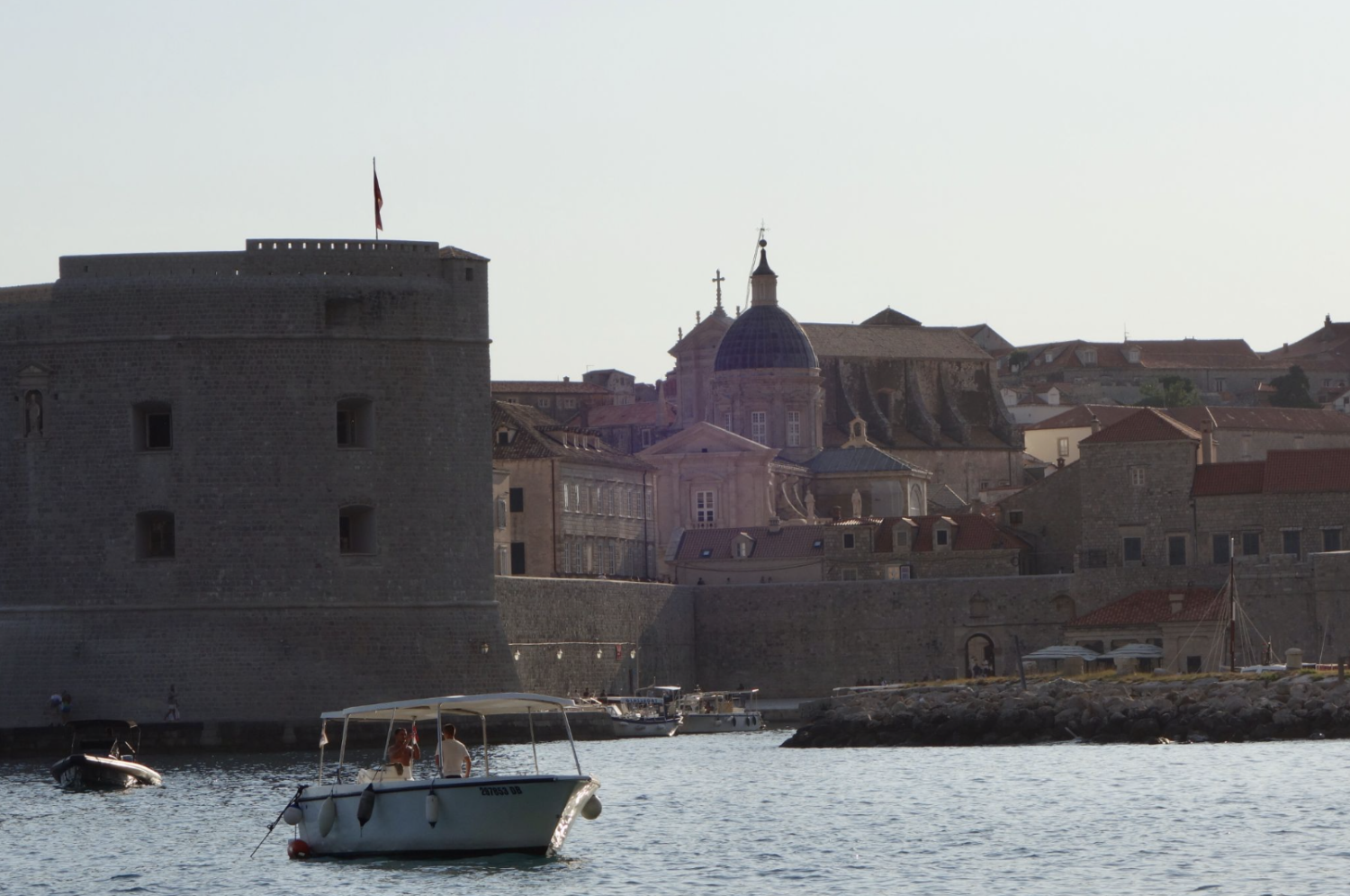
A UNESCO World Heritage Site, Dubrovnik’s Old Town feels like an open-air museum showcasing a blend of Gothic, Renaissance, and Baroque art and architecture shaped by its history as the independent maritime Republic of Ragusa. We saw the 18th century St Blaise’s church, built in honor of Dubrovnik's patron saint. He is said to have saved the city from a surprise attack by Venetian warships in 971 and thus is beloved as the protector of the city and a symbol of freedom, peace, and identity. Within the Dominican monastery is a stately library housing illustrated manuscripts, an archive, and an art collection.
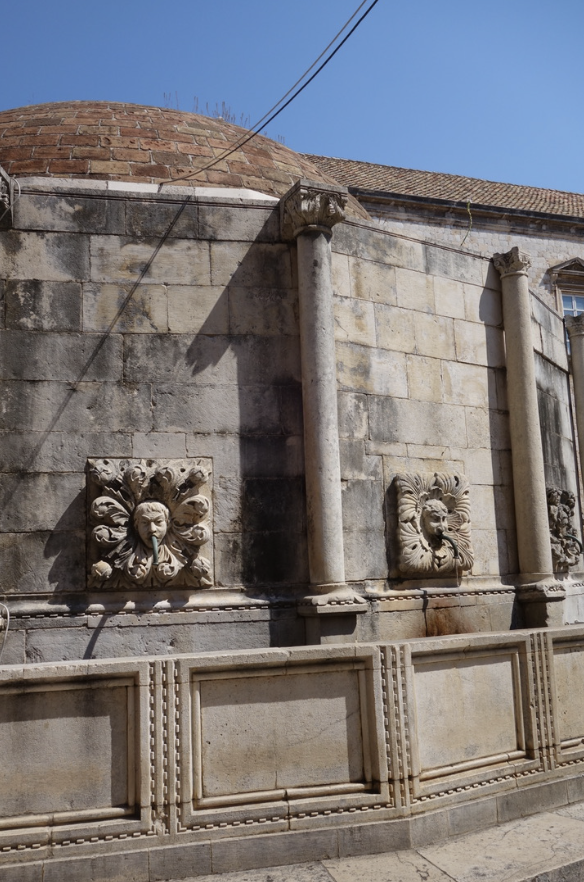
Three of sixteen mascarons of the Little Onofrio’s Fountain. Sculpted by Milanese artist Pietro di Martino.
The real spectacle of Dubrovnik is its perimeter, defined by monumental walls, fortresses, and gates. The defensive limestone walls span 1.2 miles in length, up to 82 feet in height and 13-20 feet thick. They surround most of the city from the sea. Notably, the walls were a filming location for the fictional city of King’s Landing in the TV series Game of Thrones. As we walked through the old town listening to a history audio guide, I was intrigued by the amount of Game of Thrones mentions woven into the real stories of 14th-century diplomacy. I even noticed dedicated Game of Thrones walking tour groups throughout the city’s streets. Dubrovnik’s striking architecture and design embodied landmarks like the Jesuit Staircase (Walk of Shame) and Minčeta Tower (House of the Undying in Qarth) for the Targaryens and Lannisters. It’s fascinating to see the intersection of centuries of history and heritage with modern media and pop culture. Curious about this film-induced tourism, I found sources calling it a double-edged sword. The medieval walled city was already one of Europe’s top travel destinations, and the show’s filming initially brought excitement to the area. However, as the show’s popularity skyrocketed, so did tourism, threatening to overwhelm the city’s infrastructure. Visitor caps, limited cruise ship scheduling, and a ban on rolling suitcases had to be put in place to protect the precious physical heritage.I was initially disconcerted to learn this, but after reflecting on the immense economic wealth generated, it seems that although contemporary digital media reshaped the identity of a historic city, the two have ultimately found an equilibrium in which they can coexist. It could be argued that having a previous connection, through a TV series for instance, only stands to deepen travelers' interest and connection to otherwise unfamiliar architecture and landscapes.
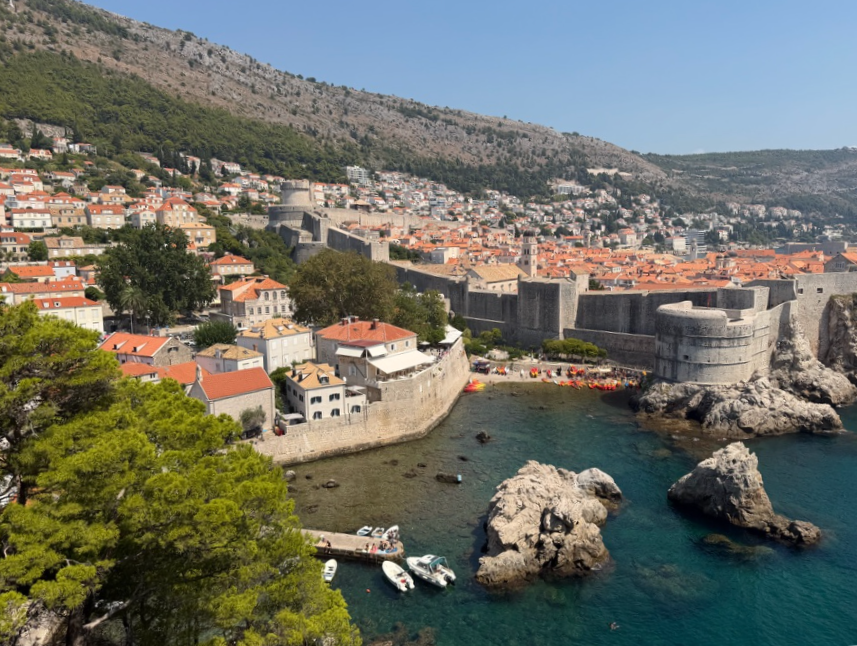
Croatia doesn’t let its rich architectural history take up the entire art stage, however. Art galleries can be found alongside palaces and cathedrals, tucked into historic houses and Gothic mansions. Their exhibitions range from collections by Croatian masters like Ivo Dulčić, Antun Masle, and Ɖuro Pulitika to rotating presentations of contemporary artists. I left Croatia brimming with inspiration and creativity that only comes from experiencing something completely new and divergent from the everyday. I loved learning the stories of Croatia’s streets and existing within the historic landscape.
